
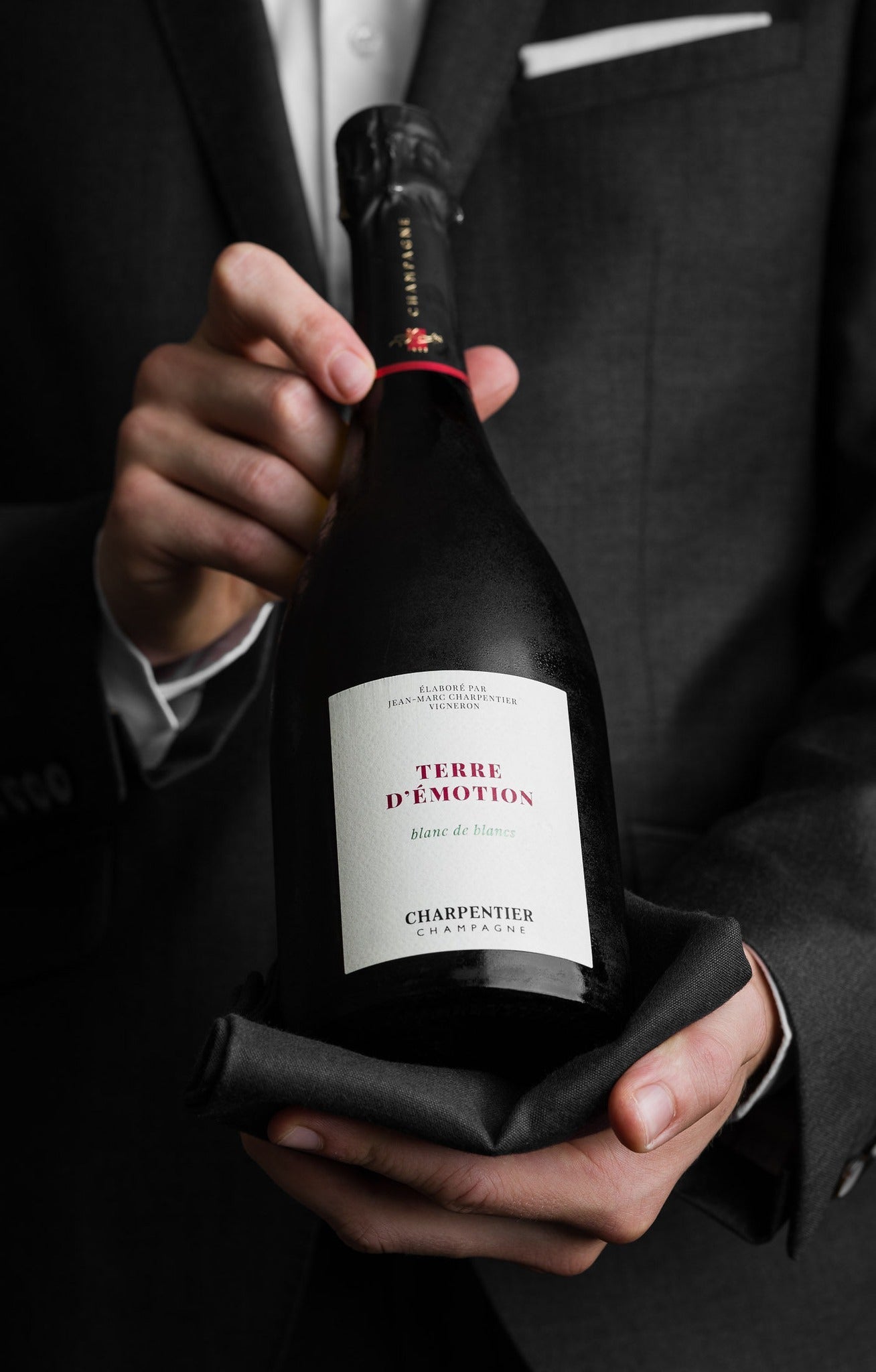
How to find the Champagne that suits you
Grape × dosage decides the taste
We tend to choose Champagne by the look of the label, a shop's recommendation or the price. In fact, the direction of the taste is decided almost entirely by just two things.
They are:
(1) the grape variety (Chardonnay / Pinot Noir / Meunier)
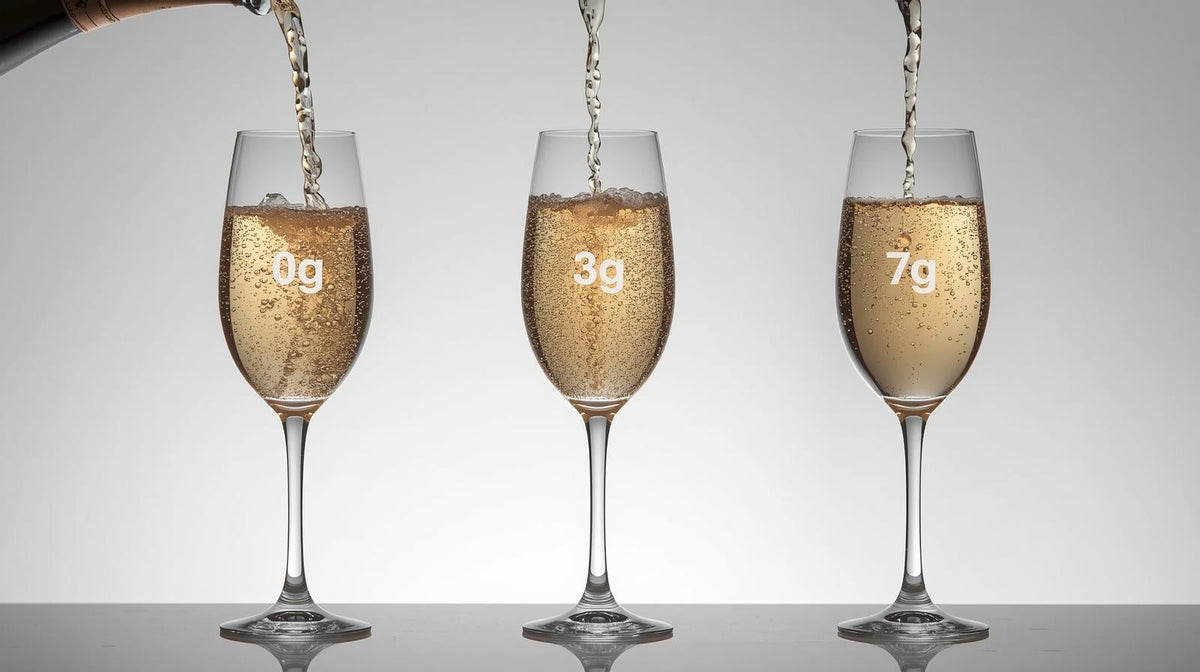
(2) the dosage — the sugar (Brut Nature / Extra Brut / Brut)
and the way the two combine.
If you have ever thought "they all taste different and I can't tell what I like", simply knowing this rule will bring your own preferences into focus straight away.
1. The grape builds the "frame" of the wine
Three grapes take the leading roles in Champagne.
Each one builds the overall frame of the wine.
● Chardonnay
Freshness, minerality, delicacy
White flowers, lemon, white peach and a saline mineral edge.
Crisp acidity is its signature, leaving a cool, pure impression.
Choose it if you like refined transparency.
Character:
-
Clean and dry
-
Finely honed acidity
-
A hint of the sea (minerality)
Keyword: Blanc de Blancs — Champagne made from 100% white grapes (Chardonnay)

● Pinot Noir
Power, sturdy fruit, length
Red fruit, baked apple, a fragrance of spice.
Rounder on the palate, with depth and dimension.
Choose it if you like a powerful style, or want to drink with food.
Character:
-
Body and richness
-
Red-fruit aromas
-
A long finish
Keyword: Blanc de Noirs — Champagne made from 100% black grapes

● Meunier
Approachability, softness, a toasty note
Round, with ripe fruit and the toasty character of brioche and caramel.
The style is gentle and enveloping.
Its charm is how easy it is to drink, with no ceremony required.
Character:
-
Softness
-
Ripe fruit
-
A toasty finish

2. The dosage decides the "expression"
Even with the same grape, the amount of dosage (added sugar) changes the impression the wine makes.
Without knowing this, it is easy to lose track of what you actually like.
● Brut Nature (0–3 g/L)
Bone dry / clarity and cut
With virtually no sugar added, the natural acidity and minerality of the grapes come through unmasked.
For those who like a finely honed taste.
Suits you if:
-
You want to drink with food
-
You like acidity
-
You want to taste the wine in its purest form
● Extra Brut (0–6 g/L)
Dry / balanced
Keeps the dimension of the wine while holding on to a dry cut.
Many growers consider this the ideal range.
Suits you if:
-
You want some cut
-
But find bone dry a little severe
-
You want to taste the character of the grape
● Brut (6–12 g/L)
Off-dry / generous and expressive
A little sugar swells the fruit and opens up the aromas.
Easy to drink, and liked by a wide range of people.
Suits you if:
-
You want to enjoy the aromas
-
You prefer something easy on its own
-
You are new to Champagne

Finding your style through grape × dosage
The heart of the matter is the combination.
The same Chardonnay, for example, can look completely different.
● Chardonnay × Extra Brut
Clarity, and a minerality like sea air
Cold stone and lemon.
A finely honed kind of beauty.
→ For those who love mineral-driven Champagne
Recommended: Le Chardonnay Blanc de Blancs Extra Brut 2016, Champagne Follet-Ramillon

● Chardonnay × Brut
Elegance, scented with white peach and pear
The acidity is firm, but the fruit is round and soft.
It leans toward refined and easy-drinking.
→ For those who want some flourish as well
Recommended: Blanc de Blancs Prestige Grand Cru 2008, Champagne Duval-Leroy

● Pinot Noir × Extra Brut
Power and cut together
The weight of red fruit plus the tension of a dry style.
A Champagne that keeps the meal moving.
→ For red-wine drinkers, and for pairing with meat
Recommended: Cœur de Craie Rilly-la-Montagne Premier Cru 2018, Champagne Pierre Baillette

● Meunier × Extra Brut
A gentle sweetness and a toasty edge
Ripe fruit and a brioche character.
Approachable and expressive.
→ For beginners, and for anyone who wants a touch of sweetness
Recommended: Pur Meunier Extra Brut NV, Champagne Romain Tribaut

Start by putting your own taste into words
If you are unsure, three questions will point you in the right direction:
-
Do you prefer high acidity, or something softer?
→ High: Chardonnay, or Pinot Noir with low dosage
→ Softer: Meunier, Brut -
Do you prefer aromatic generosity, or a crisp finish?
→ Aromatic: Brut
→ Crisp: Brut Nature / Extra Brut -
Drinking with food, or on its own?
→ With food: the drier styles
→ On its own: the more expressive styles
That is all it takes for the shape of your preference to appear.
In summary
The frame from the grape × the expression from the dosage
That is the heart of choosing Champagne.
-
Chardonnay: clarity and minerality
-
Pinot Noir: power and length
-
Meunier: soft, toasty roundness
And:
-
Lower dosage: finely honed and dry, made for the table
-
Higher dosage (Brut): fruit and flourish, easy on its own
Once you know how the two combine, you can get to the taste you love by the shortest route — without being led astray by the name on the label.

Written by 秋元賢介
Private Sales Manager at Cépages and a JSA-certified sommelier, with more than 20 years in the trade, largely at major and independent wine retailers. Writes with the aim of bridging passionate producers and drinkers in Japan, carrying that enthusiasm through to the page.

Leave a comment
This site is protected by hCaptcha and the hCaptcha Privacy Policy and Terms of Service apply.