
Article: Differences between organic wine certification agencies
Differences between organic wine certification agencies
In recent years, we often hear terms related to wine that emphasize consideration for nature and the environment, such as sustainability, SDGs, organic farming, biodynamic, natural wine, and natural wine.
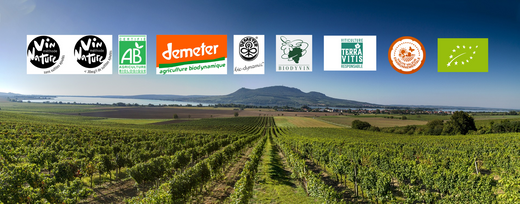
In fact, you often see wines with various logos stamped on the labels, don't you?
However, I think that there are very few people who clearly understand the differences between the meanings that each logo represents.
Here we will explain the differences between the many organic certifications available.
Differences in farming methods
Before we learn about the differences between certification agencies, let's first understand how grapes used in organic wine are grown.
Understanding the differences between these farming methods is a prerequisite for knowing the differences between organic certification agencies.
Detailed regulations will be discussed in the sections on each certification body, but for now, please first understand the concepts behind each term.
Lutte raisonnée - reduced pesticide farming
This method of reduced pesticide farming, which basically involves growing crops without using chemical fertilizers or pesticides, and only using the minimum amount of pesticides and chemical fertilizers necessary when necessary, such as when crops are infested with pests or diseases , is called lutte raisonnée (French for rational response).
There is no clear definition of the amount of pesticides to be used in lutte raisonnée farming, and there is no certification organization, so the current situation is that we have no choice but to trust the conscience of the farmers when it comes to the amount of pesticides used.
Even if you want to go organic, in harsh environments like those in Champagne and Chablis, you may have to use pesticides depending on the year.
In these areas, grapes are grown using the lutte raisonnée farming method.
Biologic - Organic farming
Biologic farming is also known as organic farming.
Unlike the lutte raisonnée farming method, chemical fertilizers, herbicides, and pesticides cannot be used , so the grapes are grown using animal droppings and other fertilizers.
The only exception is Bordeaux mixture, a traditional pesticide used to prevent disease.
Harvesting is done by hand, not by machine.
Because machines are heavy, they can put too much strain on the soil, and mechanical harvesting can increase the risk of damaging the grapes, but hand-picking avoids these risks.
Biodynamic farming
It is similar to organic farming in that it does not use chemical fertilizers, herbicides, or pesticides.
What makes organic farming even more rigorous is that it is based on a theory proposed by the Australian philosopher Rudolf Steiner, and also utilizes the power of celestial bodies and the universe in cultivation .
Specifically, the movement of the moon and the constellations determines the dates for spreading fertilizer and harvesting grapes.
This biodynamic farming method is used to produce grapes for Romanée-Conti, famously the most expensive wine in the world.
Certification of agricultural production activities
Now that we understand the differences in farming methods, we will now move on to the differences between certification agencies.
There are two main differences between certification bodies:
① Certification regarding production activities
②Certification of winemaking and cultivation
Examples include:
Now, let's move on to certification related to production activities.
HVE (Highly Environmentally Valued Certification)

The HVE certification (which stands for "High Environmental Value") is awarded to farmers/vinegrowers in France who choose to adopt a sound approach, from growing the grapes to bottling.
Environmental certification is awarded to farmers who comply with regulations in four areas: biodiversity conservation, plant protection strategies, fertilizer management, and water resource management, and there are three levels.
Environmental certification is awarded to farmers who comply with regulations in four areas: biodiversity conservation, plant protection strategies, fertilizer management, and water resource management, and there are three levels.
Among these, HVE (Haute Valeur Environnementale) is the highest level of environmental certification for agricultural businesses .
Level 1: Understanding the current situation – This means that wine growers have a basic understanding of sustainable cultivation practices.
Level 2: Compliance with specified items – Compliance with 16 standards in 4 areas.
Level 3: Achievement of defined indicators – based on indicators such as respect for biodiversity, pest control, and noise management from fertilisers and irrigation.
The regulations were partially revised from January 2023 and have become stricter overall, causing widespread concern among grape growers.
In Bordeaux in particular, there was an attempt to make HVE certification an absolute requirement for AOC (Appellation d'Origine Contrôlée), but this was thwarted because it was too strict.
EU organic certification (EuroLeaf certification)

This mark certifies that agricultural products have been produced in accordance with EU organic farming regulations .
At all stages from cultivation to consumption, regular inspections are required in accordance with EU regulations, and for processed products, this certifies that more than 95% of the raw materials are organic.
Wines are required to be free of synthetic chemicals for at least the last three years .
Wineries handled by Cépage: Domaine de Cébène, Domaine Deneufbourg, Domaine le Roc des Anges, Domaine le Conte des Floris
AB Certification (AB Certification)

This is a certification mark from the French Ministry of Agriculture .
The AB in the AB mark stands for "Agriculture Biologique," which means "organic farming."
Strict standards are set, such as requiring that products contain more than 95% organic ingredients and that they be produced or processed within the EU, and surprise inspections are conducted annually.
The organic farming regulations are the same as those of EuroLeaf, but while EuroLeaf requires the label to be included, AB makes it optional.
The SO2 (sulfite) content in wine is regulated to be less than 160mg/L for red wine, less than 200mg/L for white and rosé wines, and less than 400mg/L for sweet wines.
Wineries handled by Cépage: Domaine Combel La Serre, Domaine Alain Chabanon, Domaine Berthollier, La Nouvelle Donne, Domaine des Soulanes, Domaine les Ondines, Domaine Saint Damien
ECOCERT

With its headquarters in Toulouse, France, and 23 branches around the world, it is the world's largest international organic certification organization, providing organic certification in over 80 countries. It also has a branch in Japan.
Only produce grown in fields that have not used chemical pesticides or fertilizers for over five years is certified, and strict inspections and tests, including soil tests and pesticide residue tests, are conducted once a year.
The SO2 (sulfite) content in wine is regulated to be less than 100mg/L for red wine and less than 150mg/L for white and rosé wines.
Demeter


German organic certification organization.
Only agricultural products produced using biodynamic agriculture and products processed in accordance with strict standards are permitted to bear the certification mark.
The standards are stricter than any other organic certification system , and in Europe and the United States, agricultural products that have received this certification are recognized for their proven track record and are trusted for their high quality, and are considered a kind of status symbol.
Wineries handled by Cepage: Domaines Goisot, Domaine Olivier Pithon, Mas d'Espanet, Domaine de l'Oustal Blanc, Domaine Danjou Banessy, Domaine le Soula, Domaine Tribouley, Château Couronneau
Winemaking and Viticulture Certification
The following certifications have specific requirements for grape growing and winemaking:
Although it is often less well known than certification for general production activities, it is important for wine lovers as it has some notable features such as sensory testing of the wine and the fact that famous producers are certified.
Terra Vitis

Founded in Beaujolais in 1998, this pan-French association was started by winegrowers and winemakers.
100% dedicated to viticulture.
However, there are three pillars of specifications that go beyond just grapes and wine: environmental conservation, social responsibility, and economic sustainability. Compliance with these specifications certifies producers and their wines.
It is notable that it covers not only wine but also corporate social responsibility.
Biodyvin

Certification by an organization established in France in 1995 that practices biodynamic farming.
Although the specifications are not as detailed as those required for Terra Vitis, it is unique in that wine tasting is required as a requirement for certification.
Top-class wineries such as DRC and Domaine Leflaive are members , and the number of producers joining has been increasing in recent years.
Vin Methode Nature

Natural wine (vin naturel) was conceptually defined as "wine made with as little human intervention as possible," but since there are many wines for which the standards for natural and organic are unclear, the Vin Naturel Conservation Association has established its own standards and affixes a certification mark to wines that meet these standards.
The aim is to make it easy for consumers to understand at a glance what kind of wines qualify as natural.
- We use certified organically grown grapes, such as AB (Agriculture Organic).
- The grapes are carefully selected and harvested by hand.
- It follows the standard of using wild yeast native to the production area.
That's the general framework.
There are two designs of the certification mark, distinguished by the words at the bottom right of the label: one for wines with no added sulfites (SO2) ("sans sulfites ajoutés") and one for wines with added sulfites up to 30 mg/L ("< 30 mg/l de sulfites ajoutés").
However, sulfites can only be added after the wine has fully fermented and at the time of bottling or barreling.
Conclusion
Thus, while there are differences in the degree of organic certification, they all at least prove that the grapes themselves are grown organically.
However, there are quite a few producers who actually grow grapes organically but have not obtained certification.
Therefore, I think that certification itself is not an absolute requirement for an environmentally friendly and delicious wine, but rather it should be used as a guideline and as a reference.
Written by 秋元賢介
Private Sales Manager at Cépages and a JSA-certified sommelier, with more than 20 years in the trade, largely at major and independent wine retailers. Writes with the aim of bridging passionate producers and drinkers in Japan, carrying that enthusiasm through to the page.

Leave a comment
This site is protected by hCaptcha and the hCaptcha Privacy Policy and Terms of Service apply.