
The Complete Guide to the Burgundy Hierarchy — Understanding Grand Cru and Premier Cru
Introduction: Burgundy gets far more interesting once you understand the classification
"They are both Burgundian Pinot Noir — so why is this bottle 3,000 yen and that one 30,000?" Anyone who has spent any time with the wines of Burgundy has run into that question at least once.
The key to the answer lies in the classification system. What matters, though, is this: where Bordeaux classifies the château — the producer — Burgundy classifies the land itself. The two rest on entirely different philosophies. Not who made it, but where it grew. That idea sits at the very heart of how Burgundy assigns value.
In this article we set out the four tiers of the Burgundian hierarchy, in terms anyone approaching it for the first time can follow.
Part 1: The basic structure — four tiers
Burgundy's wines are ranked in four levels according to quality — or more precisely, according to the standing of the land itself.
| Tier | Name | Approximate share of production |
|---|---|---|
| Summit | Grand Cru | around 1–2% |
| Upper | Premier Cru | around 10% |
| Middle | Village | around 36% |
| Regional | Bourgogne (regional appellation) | around 50% |
As the figures show, Grand Cru — the peak of the pyramid — accounts for a mere 1 to 2% of everything Burgundy produces. That alone tells you how narrow and how rare the summit is. Which also means that most of the Burgundy we drink day to day is village or regional level — and those wines are every bit as characterful and rewarding in their own right.
Part 2: What a Grand Cru is
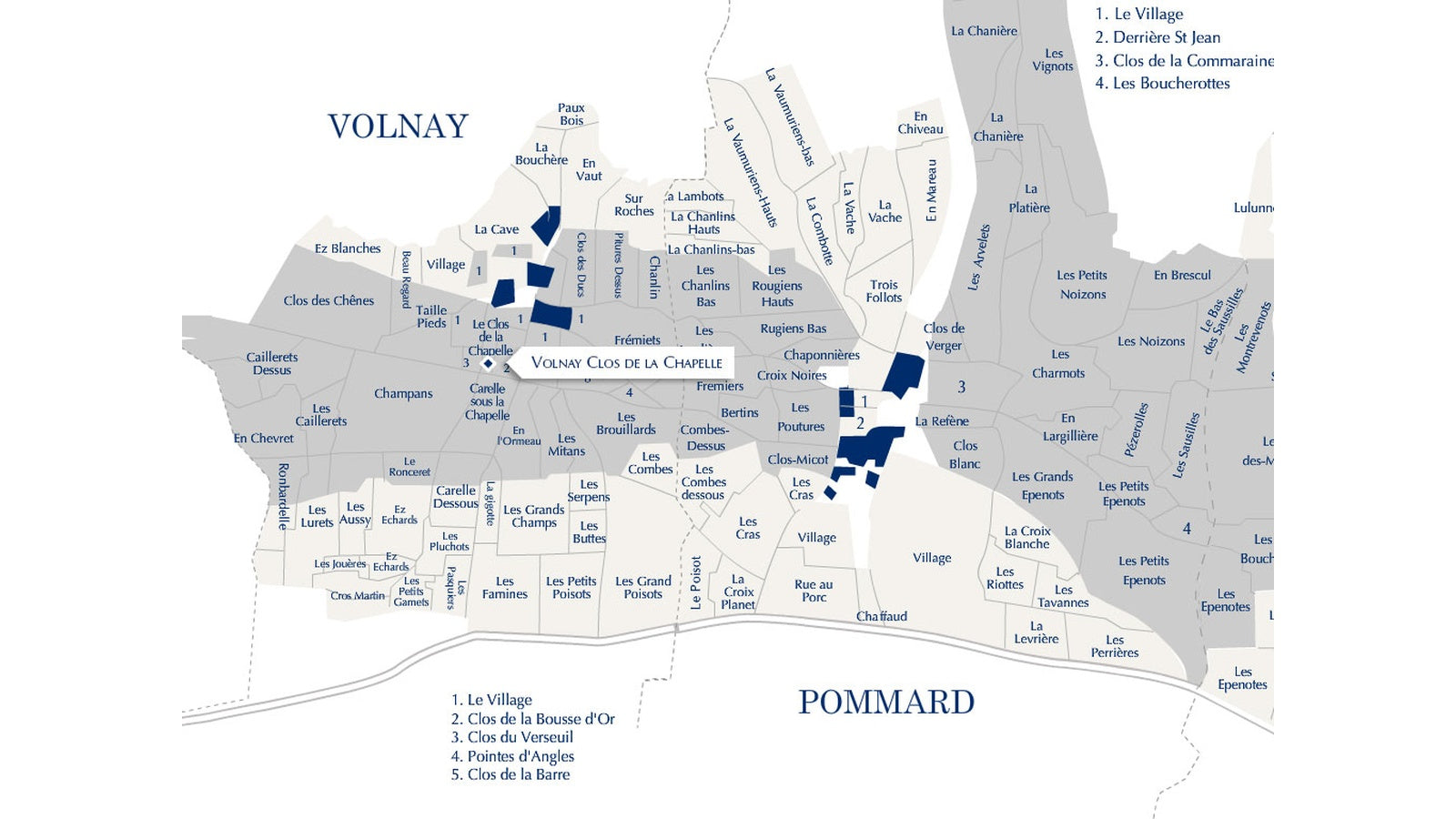
Grand Cru status belongs to a very small number of vineyards recognised as holding Burgundy's finest terroirs. The great tell on the label is that it carries no village name — the vineyard name stands alone (Chambertin, say, or Romanee-Conti).
This is the moment to recall an idea we explored in an earlier piece: that the land itself possesses a personality. The Grand Cru system is, in effect, that philosophy written into law. The vineyard becomes the subject of the classification — an expression of the very Burgundian conviction that respect for the land comes before all else.
Character varies by district, too. The Côte de Nuits holds the concentration of red Grand Crus from Pinot Noir, mostly in a powerful, firmly structured style. The Côte de Beaune, by contrast, is celebrated for its white Grand Crus from Chardonnay — names such as Corton-Charlemagne and Montrachet that many readers will have come across.
Part 3: The depths of Premier Cru
Premier Cru sits a step below Grand Cru, yet its sheer breadth and diversity lead plenty of enthusiasts to find it the more fascinating category of the two.
On the label it appears as village name plus vineyard name — Gevrey-Chambertin Premier Cru Les Cazetiers, for instance. A single village will hold several Premier Cru vineyards, and even neighbouring sites can show startlingly different faces depending on soil, slope and exposure.
We touched on the idea of the climat in that earlier article, and Premier Cru is precisely the doorway into enjoying character at climat level. Taste several Premier Crus from the same grower side by side and the differences between the vineyards stop being theory and become something you can feel. More attainable in price than Grand Cru yet full of terroir's variety, it is the tier that teaches you the most.
Part 4: Making the most of village and regional Bourgogne
It is easy to assume that a lower classification means a lesser wine. It does not. Village wines and regional Bourgogne each have their own value, appropriate to where they sit.
Village wines come from within a single named commune and express that village's character in balanced form. If what you want is to get to know what a particular village tastes like, starting at village level is often the shortest route there.
Regional Bourgogne is usually blended from fruit across several villages or districts, and has a generosity that suits everyday drinking. Premier and Grand Cru for the occasions; regional and village Bourgogne for the weeknight table — choosing by circumstance is the sensible way to live with the classification.
Part 5: Reading the label in practice

With a bottle actually in your hand, where do you look? These are the points to check.
- A vineyard name alone, printed large → very likely a Grand Cru ("Chambertin", for example)
- A village name plus a vineyard name, with "1er Cru" or "Premier Cru" → Premier Cru
- A village name and nothing more → village level
-
Only the regional name "Bourgogne" → regional Bourgogne
Commit those four to memory and you will be able to place almost any bottle the moment you glance at the label. Do try it next time you find yourself standing in front of a wine shop's shelves.
In closing: to know the classification is to know the story of the land
Burgundy's hierarchy is not simply a ranking by price. It is respect for the land, formalised — the product of generations of observation and accumulated experience.
Stop measuring Grand Cru and village wine on a single scale of better and worse, and start hearing them as different stories told by different vineyards, and Burgundy opens up enormously. What matters is less which classification you are holding than which vineyard, and which story, you feel like tasting tonight.
At Cépages we choose the wines we offer with those stories of place firmly in mind. Next time you pick out a bottle, take a moment to picture the vineyard lying just behind the label.

Written by 秋元賢介
Private Sales Manager at Cépages and a JSA-certified sommelier, with more than 20 years in the trade, largely at major and independent wine retailers. Writes with the aim of bridging passionate producers and drinkers in Japan, carrying that enthusiasm through to the page.

Leave a comment
This site is protected by hCaptcha and the hCaptcha Privacy Policy and Terms of Service apply.